



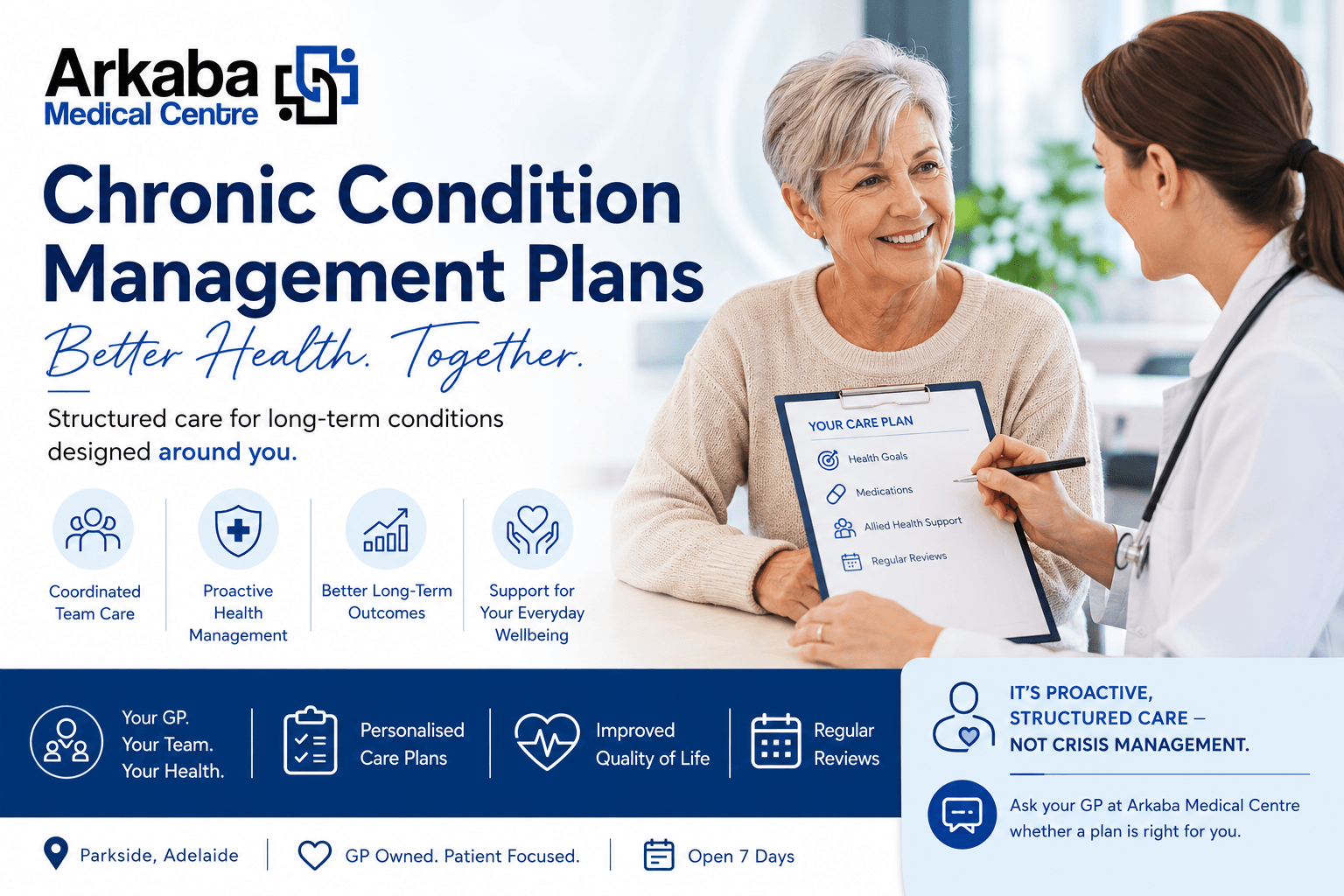
Chronic Condition Management Plans: Moving From Crisis Management to Proactive Care
Living with a long-term health condition can sometimes feel like a cycle of managing symptoms, dealing with flare-ups and seeking help only when things become difficult.
A GP Chronic Condition Management Plan (GPCCMP) can help shift care from reactive treatment to a more coordinated, proactive approach focused on long-term health, prevention and quality of life.
It can also help you and your GP look beyond individual symptoms, monitor how your health is changing over time and regularly review whether your current care is still meeting your needs.
What Is a GP Chronic Condition Management Plan?
A GPCCMP is a structured plan prepared by your GP for eligible patients with one or more chronic medical conditions.
Since 1 July 2025, GPCCMPs have replaced the previous GP Management Plan and Team Care Arrangement framework for new plans.
Your plan may include:
- the conditions being managed
- your health goals
- treatment recommendations
- medications and monitoring
- allied health referrals
- review and follow-up arrangements
The plan is developed with you, so your lifestyle, priorities and personal goals form part of the discussion.
Importantly, a GPCCMP is not intended to be a one-off document. It works best when progress is reviewed, recommendations are followed up and the plan is updated as your health changes.
Who May Be Eligible?
A chronic medical condition is generally one that has been, or is expected to be, present for at least six months, or is terminal.
Examples may include:
- diabetes
- heart disease
- asthma
- arthritis
- chronic musculoskeletal conditions
- kidney disease
- cancer
- osteoporosis
- neurological conditions
Eligibility depends on your individual circumstances, so the best starting point is a conversation with your GP.
Coordinating Your Healthcare Team
One of the main benefits of a chronic condition management plan is better coordination between your GP and other healthcare professionals.
Your GP remains at the centre of your care and may involve allied health providers such as:
- physiotherapists
- dietitians
- podiatrists
- exercise physiologists
- occupational therapists
- diabetes educators
- psychologists or other eligible professionals
Where clinically appropriate, eligible patients may be able to access Medicare-subsidised allied health services as part of their plan.
Follow-up is an important part of this process. Your GP can review whether referrals have been helpful, whether further support is needed and whether your care plan should be adjusted.
Looking Beyond Individual Test Results
Many people are becoming more interested in health checks, blood tests and monitoring their health before problems arise.
This can be useful, but test results are most meaningful when considered alongside your broader health picture.
Your GP can help interpret results in the context of:
- your medical history
- previous results and trends
- medications
- family history
- lifestyle factors
- other health conditions
The goal is not simply to collect more health information, but to understand what is relevant, decide what action may be appropriate and then review whether that action is working.
Medicare, MyMedicare and Allied Health
A GPCCMP may support access to Medicare benefits for certain allied health services.
Eligible patients can generally access up to five individual allied health services per calendar year, shared across eligible providers.
Some providers may charge more than the Medicare rebate, so it is worth checking whether there will be any out-of-pocket cost before your appointment.
MyMedicare is a voluntary registration program that allows patients to register with their preferred general practice and GP. For registered patients, chronic condition plan preparation and reviews are generally provided through their registered practice.
If you had a GP Management Plan or Team Care Arrangement before 1 July 2025, transitional arrangements may continue to apply.
Preparing for Your Appointment
A little preparation can help your GP understand your needs more clearly.
Consider bringing:
- an up-to-date medication and supplement list
- recent test results or specialist letters
- information about hospital visits
- details of how your condition affects daily life
- any health goals you would like to work towards
For example, your goal might be improving blood glucose control, reducing pain, increasing mobility or becoming more physically active.
At follow-up appointments, it can also be helpful to discuss what has improved, what has not changed and whether any new concerns have developed.
Setting, Reviewing and Adjusting Health Goals
A chronic condition management plan works best when goals are realistic and measurable.
Instead of:
“I want to exercise more.”
A clearer goal might be:
“I will walk for 20 minutes four times a week over the next eight weeks.”
Depending on your condition, your GP may also monitor:
- blood pressure
- blood glucose or HbA1c
- cholesterol
- weight
- pain levels
- mobility
- respiratory symptoms
- medication effectiveness
Regular reviews are an important part of the plan. They allow you and your GP to look at your progress, follow up referrals or test results, identify what is working and adjust treatment or goals where needed.
A plan should evolve as your health and priorities change.
When Should You Speak With Your GP?
Consider discussing a GP Chronic Condition Management Plan if:
- you have an ongoing health condition
- you regularly need care for the same condition
- you see several healthcare professionals
- your condition affects everyday activities
- you experience frequent flare-ups
- you may benefit from allied health support
- you would like a more structured approach to your care
You do not need to wait until your condition becomes difficult to manage.
If you already have a plan, it is also important to attend recommended reviews and follow-up appointments rather than waiting until symptoms worsen.
Take a More Proactive Approach to Your Health
A GP Chronic Condition Management Plan can provide a clearer framework for managing your health, coordinating your care and working towards meaningful long-term goals.
But creating the plan is only the beginning.
Ongoing review and follow-up allow your GP to see how your treatment is working, review changes in your health, follow up test results and referrals, and adjust your care when needed.
It’s proactive, structured care, not crisis management.
Could a Chronic Condition Management Plan Help You?
Ask your GP at Arkaba Medical Centre whether a plan is right for you — or whether your existing plan is due for review.
Your GP can assess your circumstances, explain your eligibility and discuss which services, reviews or follow-up may be appropriate as part of your ongoing care.
More information:
Services Australia – GP Chronic Condition Management Plan
The information in this article is general in nature and does not replace personalised medical advice. Medicare eligibility, rebates and available services can vary depending on individual circumstances. Speak with your GP or Services Australia for advice relevant to your situation.
FAQs
What is a Chronic Condition Management Plan?
A Chronic Condition Management Plan is a structured care plan developed by your GP for patients with a medical condition that has been, or is likely to be, present for six months or longer. It helps coordinate your ongoing care between your GP and other healthcare providers.
Does it give access to allied health services?
Yes. Eligible patients may be able to access Medicare-subsidised allied health services, such as physiotherapy, dietetics, podiatry or exercise physiology, where these services form part of their care plan.
Why are reviews and follow-up important?
A care plan works best when it is reviewed over time. Follow-up allows your GP to assess your progress, review results and referrals, and adjust treatment or goals if your health or circumstances change.
How often is the plan reviewed?
Your plan is generally reviewed regularly, often around every three months, to ensure your treatment continues to reflect your current health needs, goals and progress.